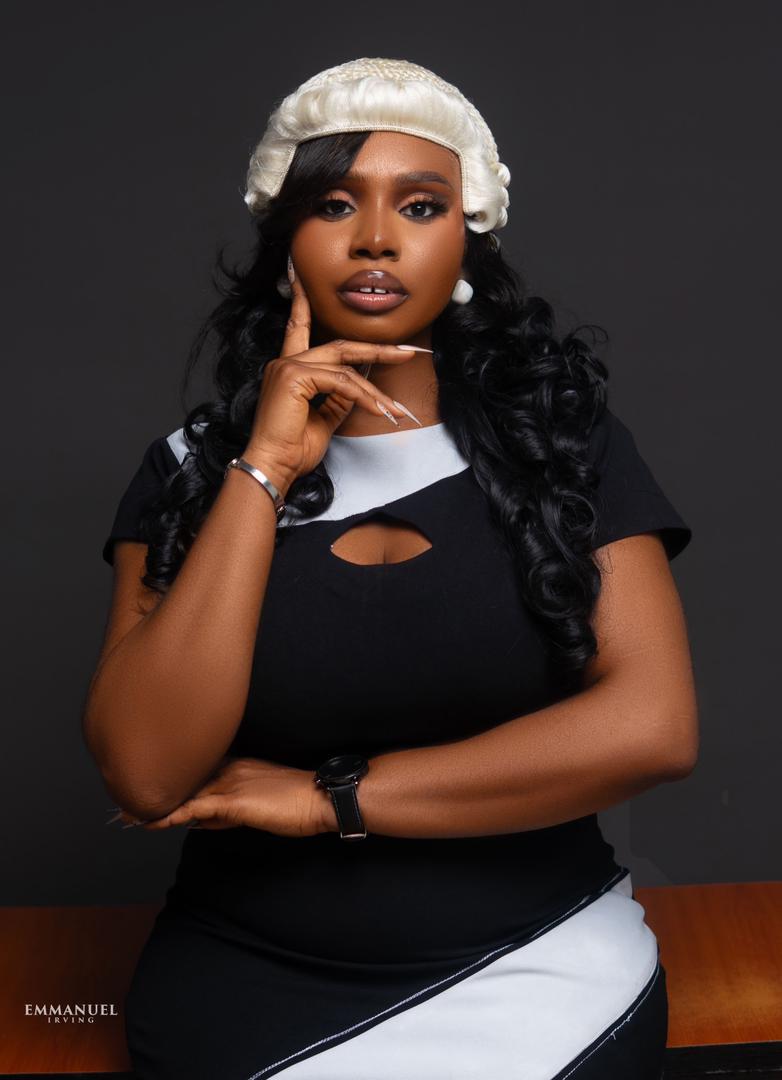


BY CHUKWU-NSI BEATRICE CHIDIMMA.
ENTERTAINMENT AND SPORTS BUISNESS LAWYER.
EMAIL: thebcesquire@gmail.com
Evolution seems to be constant and that has shaped the way the society reacts and interacts. The telecommunication industry for example has evolved from the use of post office to telephone, email and now with the rise of social media, communication is simplified.
The music industry hasn’t been different. The big question is: why does music evolve?
A close look at music from the medieval era to the 21st century shows that music didn’t evolve in isolation. It was tied to social, cultural and technological shift.
Simply put, music evolved because there was demand for more expressive, powerful and veritable tools.
In this digital era, people want to experiment with music and Artificial intelligence (AI) presents a perfect platform. This means that an average user can now, with just a dumb prompt, make a song in seconds. It extends to not just making a solo song but using AI to mimic real human artist and have them on the song as collaborators, that’s wild. It’s now a case of better prompt, better AI music.
If that is so, our definition of who an artist is begins to change. Do we call anyone who can input prompts into AI and spit out a song an artist? or one who puts in critical creative work fueled by feelings, experiences, personal relationship, ideas, opinion and are now expressed in a song an artist?
A bigger question for consumers of music is: Do we really care where music comes from? One can argue that if AI music can provoke a certain mood and feeling, then does the source matter. I’m struggling to find a balance.
The music industry is being reshaped before our very eyes, hence it is important for artist to adapt to this change or be adapted by it. AI will not move fast, it moves because you’re stuck. In conversations across creative and legal spaces, people in the industry have engaged with the thought that AI is the future. I disagree. AI is not the future, AI is what we make it. It’s future is dependent on our response to it today. I guess the big question is: how exactly are you responding?
As an entertainment lawyer that has studied AI and it’s impact in the creative space, I would say, without a shadow of doubt that artists need a blueprint to staying ahead of AI. The blueprint below applies to only forward thinkers, they are:
1. SONIC INNOVATION.
Creating a tool that makes sound is a generational influence. That’s how artist shift from making hits to shaping the future of music. The world is constantly craving for a new sound and ways to express them.
By creating a new instrument or sound system, an artist doesn't just follow trends, they set the next era of music. In a time where everything sounds alike, originality in sound design is the new revolution. When you invent a sound instrument, you're not just owning a sound, you’re owning a system. AI is the best evolution that has happened to the music industry. Not for what it’s doing, but for what it’s not doing.
Every advancement in the musical industry brought something new and original.
For instance, when synthesizers were introduced, there was fear that it would get rid of orchestra because of its ability to simulate orchestra. AI does the opposite. It struggles with originality and creativity; it is only able to replicate what already exist.
2. CREATE A NEW GENRE OF MUSIC.
One of the most powerful ways for artist to stay ahead of AI’s growing influence is to create entirely new genres of music. While the law does not allow you to own a genre, you can become its cultural founder just as Fela Kuti is to Afrobeat.
This would give lifelong recognition, credibility and influence. Every musical revolution from jazz to hip hop to Afro beat to electronic music began with someone experimenting beyond the existing boundaries of sound, rhythm and culture. AI can replicate patterns but it struggles with originating cultural movement, emotional spontaneity, human experience and social energy that births new genres.
When artist innovate sonically or conceptually, they create something AI can only follow, not lead. The future belongs to artist who don’t just make a song but invent new languages of sound. That’s where originality, intellectual property and cultural legacy meet and that’s how to stay ahead of AI. The genre you create becomes the foundation for many modern music.
3. CREATIVE ECONOMY = CONNECTION ECONOMY.
It’s no brainer that the world is in the creative driven economy. However, it’s important to plug into the fact that we are also in the attention/connection economy. This means that there is need for artist to build a connection and community with the attention they have.
Consumers want more than a song, they want a story, a process and a shared experience. Tapping into what makes us different from AI and building on that is a gateway. This could be through beliefs, sharing stories and being authentic. AI cannot imitate that level of humanity.
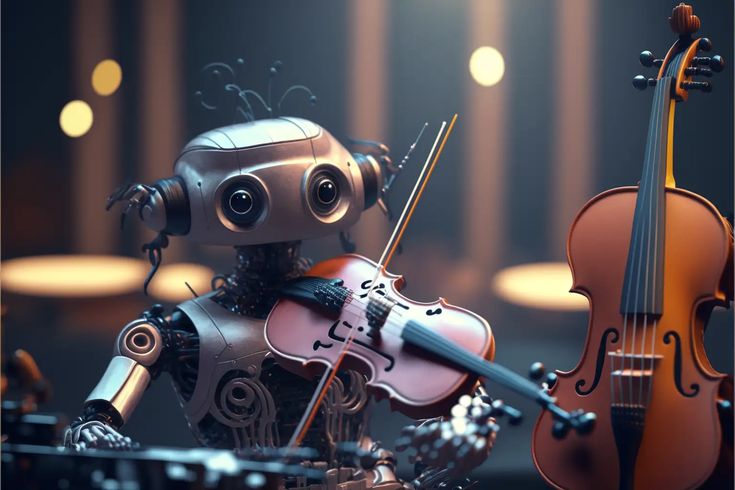
4. AI ROBOT.
Disclaimer: This should be taken with caution as AI is a transformational technology. AI bot ensures longevity of artist. With AI bot, when an artist dies, his/her AI bot still lives on. This means that AI can still collaborate and carry out live performance. So, an artist is never truly gone. This can serve as a closure for supporters to hold on to while keeping the art alive beyond time. The extent of its use must be regulated.
5. PROTECT YOUR INTELLECTUAL PROPERTY.
Every creative work deserves protection. This extends to your copyright, trademark, patent and design, voice, name, image and likeness. AI is involved to the future of creativity only to the extent to what it has access to. Protecting your intellectual property limits undue access to all forms of works. This means that with the right protection, AI is unable to mimic or work with your datasets and in the instance it does, you as an artist has legal standing to sue. A great tool to get a heads up on potential infringement is through watermarking and fingerprinting. It notifies an artist of potential intellectual property breach and helps you monetize if someone else uploads your content. Platforms like YouTube’s content ID already use such systems to identify and manage ownership, musicians should too.
6. LAWS.
There are a couple of laws that address the use of AI content. Some of them are still in the draft stage. They include:
- ELVIS ACT: Elvis stands for “ensuring likeness, voice and image security ACT.
It protects against unauthorized AI generated replicas. This means that an artist can sue (civil or criminal) for the use of his or her likeness, voice or name in any media without consent. This restrains people who want to play around with AI by mimicking certain artist or generating false images that are misleading. A Nigerian artist whose music or likeness is exploited in the U.S can seek protection under those laws. Other relevant laws that are still in the draft stage is the No Fakes Act and no AI Fraud Act.
- Take it Down Act: As AI evolves, it is capable of mimicking people and creating nonconsensual and intimate visuals. Protection against the making of this content is what this act focuses to prevent.
In Nigeria, while AI specific regulation is still developing, the copyright Act, 2022 recognizes computer generated works and NDPR (Nigeria Data Protection Regulation) and NITDA (National Information Technology Development Agency) AI framework provides guidance on data and ethical use of AI.
Nigeria has been declared Africa’s fastest growing entertainment market in 2025 by PricewaterhouseCoopers, PWC. This is proof that our creative sector is ever growing.
The blueprint should prompt this dearest reader to be authors of the future of music rather than being passive about the existence of AI and merely following it.
I do hope that whoever comes across this article has an open mind and is able to make do with the information above.

Article
August 13, 2025
"Is a Lifetime Flight Ban Legal Without a Fair Hearing?" The Legal Turbulence of the Ibom Air–Emmanson Saga
On 10 August 2025, what should have been an ordinary Ibom Air flight turned into a fight when passen...
Article
April 15, 2025
IS THE SUPREME COURT RULING IN SUNDAY JACKSON CASE A DANGEROUS PRECEDENT
The Supreme Court’s recent decision in Sunday Jackson v. The State has sparked widespread debate, ...

Interview
April 23, 2025
Interview with Sherifdeen Badmus
My decision to pursue an LL.M. in International Commercial Law at the University of Bristol is drive...
